

Best Coffee Distribution Tools For Beginners
🏆 Top Picks at a Glance
 #1
Product listing
KNODOS 54mm Espresso Distribution Tool Walnut Coffee Distributor
Check Price
 #2
Product listing
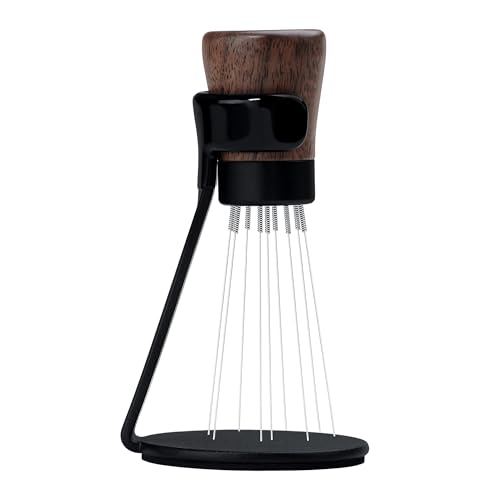
Normcore WDT Tool V2.1 with Stand, 9 Prong 0.23mm Espresso Distribution Too, Weiss Distribution Technique, Magnetic Coffee Stirrer with 16 Extra Needles, American Walnut Wood Handle, New Upgraded
Check Price
 #3
Product listing
Apexstone 53mm Coffee Distributor, Espresso Distribution Tool, Coffee Leveler Compatible with Breville 54mm Portafilter
Check Price
A clean, even coffee bed is the quiet foundation of a repeatable espresso shot—and the right distribution tool can make that step more consistent. This roundup compares fine-needle WDT stirrers and adjustable coffee distributors, with attention to needle diameter, base flatness, handle ergonomics, and portafilter fit. You’ll find options for standard portafilters as well as 54 mm Breville-compatible setups, including walnut-handled and aluminum-handled tools.
⚡ Quick Answer: Best Coffee Distribution Tools
Best Walnut Distributor: KNODOS 54mm Espresso Distribution Tool Walnut Coffee Distributor
$39.99 — Check Price
Table of Contents
Main Points
- Match the tool diameter to the basket: 58 mm distributors suit standard 58 mm portafilters, while Breville 54 mm baskets generally need a 53 or 54 mm-compatible tool such as the Apexstone 53 mm or KNODOS 54 mm.
- Choose a fine-needle WDT tool when clumping and uneven density are your main problems. Needles break up compacted grounds before tamping, helping create a more uniform puck and reducing the chance of channeling through low-resistance areas.
- Prioritize needle count and gauge for the style of distribution you prefer. The listed tools range from five 0.4 mm needles in the Zolunu to seven 0.35 mm needles and ten 0.35 mm needles in the Nessus; finer needles generally disturb the grounds more delicately, while thicker needles can feel more durable and direct.
- Consider handle material and workflow ergonomics: walnut handles offer a warm, comfortable grip, while aluminum handles are lightweight and easy to clean. A stand, magnetic base, or built-in brush also keeps the tool controlled and the station tidy between shots.
- Choose a distributor or WDT tool that fits your basket and workflow. A suitable diameter, comfortable handle, and included stand or replacement needles can make distribution easier to repeat before tamping.
Our Top Picks
Affiliate disclosure: if you buy through these links, we may earn a commission at no extra cost to you.
Factors to Consider
Frequently Asked Questions
What does a coffee distribution tool do?
It redistributes espresso grounds into a more uniform bed before tamping. A more even bed gives water fewer areas of low resistance to exploit, which can help reduce channeling and make extraction more consistent.
Should a beginner buy a WDT tool or a distributor?
Choose a fine-needle WDT tool if your grounds are clumpy or show uneven density after dosing. Choose a distributor if you want a simpler workflow that produces a consistently leveled surface with less manual distribution.
Are 58 mm coffee distribution tools universal?
No. A 58 mm tool is suited to standard 58 mm portafilter baskets, but smaller baskets—such as 54 mm Breville models—need a different diameter. Confirm the basket’s internal size before ordering rather than relying only on the machine brand.
Is the KNODOS 54mm Espresso Distribution Tool Walnut Coffee Distributor a good beginner option?
It can suit beginners who want a straightforward distributor for a compatible 54 mm basket. Confirm the basket’s internal size before ordering, and remember that distribution does not replace tamping.
How many needles should a WDT tool have?
Needle count is only one part of the design; thickness, spacing, stiffness, and the tool’s ability to reach clumps matter as well. The listed WDT tools use different needle counts and thicknesses, so compare the complete needle system rather than choosing by count alone.
Does a distributor replace tamping?
No. It levels and redistributes the grounds, but you still need a flat, controlled tamp to consolidate the puck. A distributor can help prepare the surface before tamping.
What should I look for in a coffee distributor’s base?
Look for a flat, rigid base that sits evenly on the basket rim, plus adjustable depth when available. Confirm the tool’s diameter and fit for your basket, and consider whether the design gives you enough control over how deeply it engages the grounds.
Conclusion
The best coffee distribution tool for a beginner is the one that fits the basket precisely and supports a repeatable puck-preparation routine. The KNODOS 54mm Espresso Distribution Tool Walnut Coffee Distributor is the best option for a straightforward starting point. For clumpy grounds, a fine-needle WDT tool such as the Normcore WDT Tool V2.1 with Stand, 9 Prong 0.23mm Espresso Distribution Too, Weiss Distribution Technique, Magnetic Coffee Stirrer with 16 Extra Needles, American Walnut Wood Handle, New Upgraded can support more even preparation before tamping.


