

Best Wdt Tools For Everyday Use In 2026
🏆 Top Picks at a Glance
 #1
Product listing
Normcore 58mm Planetary WDT Tool V3, Adjustable Needle Distributor
Check Price
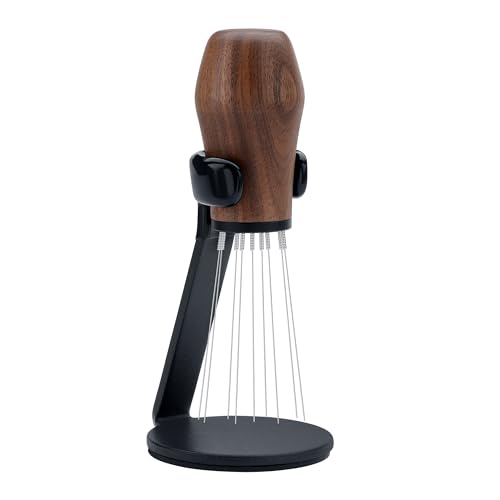 #2
Product listing
Normcore WDT Distribution Tool with Stand V3, Weiss Distribution Technique, 9 Prong Needle Espresso Stirrer, American Walnut Wood Handle
Check Price
 #3
Product listing
Subminimal Flick WDT Espresso Distribution Tool - Retractable Needle Tamper
Check Price
For a repeatable 58mm shot, distribution is where extraction stops being a guess: Bariscope recommends using a thin needle or multi-needle tool to stir gently through the full depth of the grounds before tamping, because uneven particle packing can let water follow low-density channels. In a home setup, that means choosing a WDT tool whose needle gauge, base flatness, and handle feel support a consistent tamp rather than a hurried one. This 2026 roundup compares planetary and spirographic motion, stainless, aluminum, and wood handles, and portafilter fit so you can match the tool to your basket, dosing funnel, and daily workflow.
⚡ Quick Answer: Best Wdt Tools
Best Adjustable Needles: Normcore 58mm Planetary WDT Tool V3, Adjustable Needle Distributor
$99.99 — Check Price
Table of Contents
Main Points
- Prioritize a flat, non-scratching base and a needle depth that reaches the full puck without dragging the basket; espresso water pressure is commonly described as 9 bars when explaining how channels form in a puck, so even small density differences can show up in the cup.
- Choose handle material by grip and daily feel: stainless is rigid and easy to clean, aluminum is lighter and often pairs well with a stand, and wood offers warmth and a forgiving grip but needs care around moisture and oils.
- Planetary or spirographic tools are often chosen for repeatable distribution in 58mm setups, while standard straight-needle tools are simpler and more affordable if you already have a stable, full-depth stirring motion; confirm the specific tool fits your basket, funnel, and portafilter.
- Needle alignment should be handled carefully to avoid scraping baskets or snagging a dosing funnel, and replaceable needles are useful because thin needles can bend over time; look for spare needles or a clean replacement system.
- Check compatibility beyond diameter: the tool should clear your portafilter, dosing funnel, and basket rim, while the handle should let you apply even pressure without twisting the needle array or losing base contact.
Our Top Picks
Affiliate disclosure: if you buy through these links, we may earn a commission at no extra cost to you.
Factors to Consider
Frequently Asked Questions
What is a WDT tool used for?
A WDT tool is used for Weiss Distribution Technique, a method named after John Weiss, who documented it in a home barista forum post in 2005. It uses a thin needle or multi-needle tool to stir gently through the full depth of the grounds before tamping. The goal is to break up clumps and redistribute particles so the puck compresses more evenly.
Does WDT actually improve espresso extraction?
Yes, because clumps can create dense pockets that compress differently during tamping, producing zones of different density inside the puck. Water under 9 bars of pressure can follow low-density channels, causing both over-extraction and under-extraction in the same cup. Better distribution helps reduce those uneven paths and supports a more consistent shot.
Are spirographic WDT tools worth the cost?
A spirographic WDT tool can be worth it if you want repeatable distribution with adjustable depth. For a 58mm setup, the Normcore 58mm Planetary WDT Tool V3, Adjustable Needle Distributor is a strong option, and thin needles with an easy, repeatable motion are generally useful. If you prefer a lower-cost option, a simpler manual needle workflow is still effective.
What is the best WDT tool for a 58mm portafilter?
For home baristas who want repeatable puck prep on a 58mm setup, the Normcore 58mm Planetary WDT Tool V3, Adjustable Needle Distributor is a strong choice. That makes it a good option if you want a repeatable motion on a 58mm setup.
Can a WDT tool scratch my basket?
It can if the needles are misaligned, bent, or forced into the basket walls. Needle alignment should be handled carefully to avoid scraping baskets or snagging a dosing funnel. Choose a tool with replaceable needles and check them regularly, because thin needles can bend over time.
Do I need a WDT tool if I use a puck screen?
A puck screen can help with flow, but it does not replace distribution because clumps can still create uneven density before the screen is in place. WDT is especially useful when fine particles bind into clumps from static, low humidity, dry beans, or light roasts ground fine. Using both can support a more even puck and a cleaner extraction.
How should I use a WDT tool correctly?
Insert the needles gently and stir through the full depth of the grounds, not just the surface layer. Keep the motion light and repeatable so you redistribute particles without dragging the dose or disturbing the basket. Finish with a level, firm tamp so the puck starts with even density and a flat base.
Conclusion
For everyday home espresso, the best WDT tool is the one that gives you a clean, repeatable distribution motion without fighting your portafilter or basket. If you want premium consistency on a 58mm setup, the Normcore 58mm Planetary WDT Tool V3, Adjustable Needle Distributor is the strongest pick; if you want a more compact option, the Subminimal Flick WDT Espresso Distribution Tool - Retractable Needle Tamper is a solid alternative.


