

What Espresso Setup Do You Actually Need Quiz
A super-automatic espresso machine grinds, doses, tamps, and pulls your shot at the press of a button — zero workflow, zero variables to manage, and consistent results every morning. You sacrifice some quality ceiling (a skilled barista on a manual machine can pull a better shot) but gain speed, convenience, and maintenance simplicity. For households where multiple people make drinks, super-automatics shine — each person gets a consistent cup without training. They require regular cleaning cycles but no daily workflow.
Table of Contents
- Our Top Picks
- What matters most to you in your morning espresso routine?
- What's your current espresso experience level?
- How much counter space and workflow complexity can you handle?
- How many espresso drinks do you make per day?
- What's your total budget for your espresso setup (machine + grinder)?
- 🤖 Your Pick: Super-Automatic Espresso Machine
- ⚙️ Your Pick: Semi-Automatic Espresso Machine + Grinder
- 🏆 Your Pick: Prosumer Semi-Automatic + Dedicated Burr Grinder
- 🔧 Your Pick: Manual Lever Espresso Machine
- Frequently Asked Questions
Our Top Picks
Affiliate disclosure: if you buy through these links, we may earn a commission at no extra cost to you.


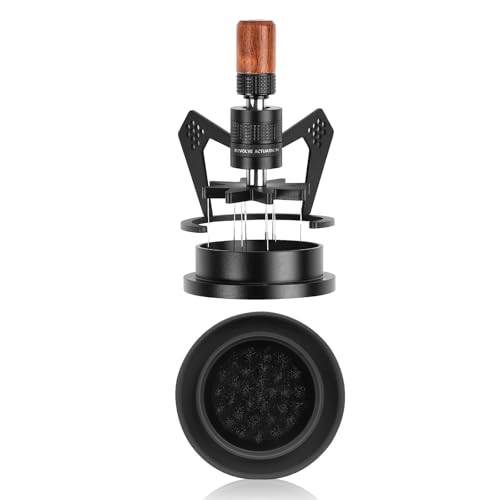
What matters most to you in your morning espresso routine?
What's your current espresso experience level?
How much counter space and workflow complexity can you handle?
How many espresso drinks do you make per day?
What's your total budget for your espresso setup (machine + grinder)?
🤖 Your Pick: Super-Automatic Espresso Machine
Best Value Super-Auto: De'Longhi Magnifica Start ($499) — Most Recommended Entry
The De'Longhi Magnifica Start is the most recommended entry super-automatic for convenience-first home users — a built-in conical burr grinder with 13 grind settings, LatteCrema automatic milk frothing system for hands-free lattes and cappuccinos, a dedicated cold brew function, and one-touch recipes for espresso, coffee, latte, and cappuccino. At $499, it delivers measurably better espresso quality than pod systems (freshly ground beans vs pre-ground pods make a significant difference) with nearly the same convenience. De'Longhi's reliability record at this price point is consistently better than competing brands.
Premium Super-Auto: Jura E8 ($1,799) — Swiss Precision, 17 Specialties
The Jura E8 is the benchmark super-automatic for households that want the best push-button espresso available — 17 pre-programmed specialties including Americano, flat white, and macchiato, Jura's Pulse Extraction Process (PEP) that applies pressure in pulses for better short espresso extraction, an Intelligent Pre-Brew Aroma system, a color display with intuitive touchscreen navigation, and Jura's build quality that routinely lasts 10+ years with proper maintenance. Jura machines are the standard for home users who prioritize reliability and longevity over initial cost. The E8 is often compared favorably to café-quality drinks in blind taste tests.
⚙️ Your Pick: Semi-Automatic Espresso Machine + Grinder
The semi-automatic + dedicated grinder combination is the standard home barista setup — it gives you real control over grind size, dose, distribution, and extraction time without the complexity of a manual lever machine. The grinder is actually more important than the machine: a quality burr grinder that produces consistent particle size is the single biggest factor in espresso quality at home. Budget approximately 40–50% of your total toward the grinder.
Best Entry Semi-Auto + Grinder: Breville Bambino Plus ($499) + Baratza Sette 30 ($249)
The Breville Bambino Plus is the most recommended entry semi-automatic machine — a thermojet heating system that reaches brew temperature in 3 seconds (no warm-up wait), 54mm portafilter for proper puck prep, automatic milk texturing wand, and pressure regulation for consistent 9-bar extraction. Paired with the Baratza Sette 30 grinder (stepped adjustment, 30 grind settings, consistent particle size for espresso), this combination delivers genuine specialty café quality at home for $748 total. The Bambino Plus is small enough for a limited counter setup without sacrificing any meaningful performance for a 1–3 drinks per day household.
Prosumer Step-Up: Breville Barista Express Impress ($899) — Machine + Grinder Integrated
The Breville Barista Express Impress integrates a conical burr grinder directly into the machine — dose directly into the portafilter, use the assisted tamping system for consistent 10kg pressure every time, and pull your shot without transferring grounds between a separate grinder and portafilter. The Impress's integrated design reduces workflow friction significantly for daily use. At $899, it's the step-up from the Bambino that adds a meaningful grinder, pressure gauge for shot monitoring, and the Impress tamping system that eliminates the most inconsistent variable for beginners. A single-machine solution that produces excellent results without a separate grinder footprint.
📖 Read our best espresso accessories for home baristas →
🏆 Your Pick: Prosumer Semi-Automatic + Dedicated Burr Grinder
For serious home baristas who want to approach professional café quality at home, the prosumer tier — dual boiler or heat exchanger machines with PID temperature control — is where the real quality jump happens. These machines maintain stable brew temperature across multiple shots, allow simultaneous brewing and steaming, and give precise control over every extraction variable. Pair with a flat burr grinder capable of espresso-fine, consistent particle distribution and the home setup genuinely competes with specialty café output.
Best Prosumer Machine: Breville Dual Boiler ($1,499) + Eureka Mignon Specialita ($499)
The Breville Dual Boiler (BDB) is the most recommended prosumer espresso machine — separate brew and steam boilers with PID temperature control on both, a 58mm commercial portafilter, pre-infusion pressure profiling, adjustable pump pressure, and a flow control paddle for manual profiling. The BDB matches the core functionality of $3,000+ Italian machines at $1,499. Paired with the Eureka Mignon Specialita (stepless grind adjustment, 55mm flat burrs, extremely low grind retention for single-dosing), this is the combination that home espresso communities consistently recommend for under $2,000 total. No other setup in this price range delivers comparable control and quality.
The Pinnacle: Decent Espresso DE1PRO ($2,599) — Pressure Profiling Mastery
The Decent Espresso DE1PRO is the most advanced home espresso machine available — pressure, flow, and temperature profiling controllable in real time via tablet app, an 8-group pressure sensor monitoring extraction continuously, the ability to replicate any historical pressure profile or design custom ones, and an active community sharing profiles for specific origin coffees. For a home barista who has mastered the fundamentals and wants to explore pressure profiling, the Decent is the machine that professional consultants and competition baristas use at home. It produces espresso that is not achievable on conventional machines at any price.
📖 Read our best espresso distribution tools →
🔧 Your Pick: Manual Lever Espresso Machine
Manual lever espresso machines — both spring-loaded and direct lever types — produce exceptional espresso through a completely hands-on extraction process. You control pressure by feel, the shot is a tactile experience, and the machines have no pumps, no electronics, and essentially nothing to break. The trade-off is significant technique development required — consistent shots take weeks of practice. For the espresso enthusiast who treats pulling shots as a meditative craft practice, or for someone who values simplicity and longevity above all, the manual lever is the most satisfying path.
Best Entry Manual Lever: Flair 58 ($299) — Portable Precision
The Flair 58 is the most recommended entry manual lever machine — a 58mm portafilter (commercial standard), a pressure gauge for shot monitoring while you pull, stainless steel construction, detachable brew head for easy cooling control between shots, and a manual pressure profile you develop through practice. The Flair 58 is portable (no power required beyond pre-heating the brew head), requires no plumbing, and produces shots that experienced users describe as among the best they've had from a home machine. At $299, it's the accessible entry point into manual lever espresso with commercial-grade portafilter compatibility.
Classic Spring Lever: La Pavoni Europiccola ($799) — Italian Icon
The La Pavoni Europiccola is the Italian lever espresso machine that defined the category — a spring-loaded lever that delivers consistent 8–10 bar pressure automatically during the extraction phase, all-metal construction that has been made essentially unchanged since 1961, a small 0.8L boiler that heats quickly, and a direct connection to the craft of espresso pulling that no pump machine can replicate. La Pavoni machines routinely last 30–50 years with proper maintenance. The Europiccola requires technique development and careful temperature management, but rewards the patient home barista with espresso that carries a distinct character — the natural pressure curve of a spring lever produces a different shot profile than pump machines, preferred by many serious espresso drinkers.
📖 Read our best barista tools for home espresso →
TamperGuide.com participates in the Amazon Associates program and earns commissions on qualifying purchases at no extra cost to you.
Frequently Asked Questions
What is the best espresso tamper for even coffee distribution?
The best espresso tamper is one that ensures even pressure and consistent tamping. A tamper with a flat, solid head and a handle that fits comfortably in your hand is ideal for achieving uniform extraction.
How do I choose the right portafilter for my espresso machine?
Choose a portafilter that matches your machine's group head size and type. Look for features like a spring-loaded handle, easy cleaning, and compatibility with your espresso puck size for optimal performance.
Is a puck screen worth it for my espresso routine?
A puck screen is worth it if you want to catch fines and improve extraction consistency. It helps prevent over-extraction and ensures a cleaner, more balanced espresso shot by filtering out unwanted particles.
How can I improve my espresso dosing accuracy?
Use an espresso dosing ring to measure and distribute coffee grounds evenly. This tool ensures consistent dosing, which is crucial for achieving a balanced and flavorful shot every time.
What are the best espresso accessories for beginners?
Beginners should start with a quality tamper, dosing ring, and puck screen. These tools help achieve consistent tamping, dosing, and extraction, forming a solid foundation for improving espresso skills.
How do I know if I need a WDT tool for my espresso setup?
You need a WDT (Weight Distribution Tool) if you're looking to achieve even coffee distribution. It helps ensure the grounds are compacted uniformly, leading to better extraction and a more consistent shot.
What is the best way to clean my espresso portafilter?
The best way to clean your portafilter is to use a brush and a small amount of espresso cleaner. Regular cleaning prevents buildup and maintains the performance of your portafilter, ensuring consistent shots over time.


